
Yes, cat probiotics can support digestive health in some cats, particularly when the normal balance of intestinal microorganisms has been disrupted. They may help improve stool consistency and support a healthier gut environment. However, probiotics are not a cure-all, and the results depend heavily on the specific probiotic strain, your cat’s condition, and the underlying cause of the digestive problem.
That distinction matters. A cat with occasional loose stool after a stressful event may respond differently from a cat with chronic diarrhea, inflammatory bowel disease, parasites, or another gastrointestinal disorder. Recent research is promising, but scientists still describe the overall evidence in cats as limited and sometimes low-certainty.
What Are Cat Probiotics?
Cat probiotics are supplements containing live microorganisms intended to provide a health benefit when given in appropriate amounts. Common organisms used in pet probiotics include species from groups such as Lactobacillus, Bifidobacterium, Enterococcus, and certain Bacillus species.
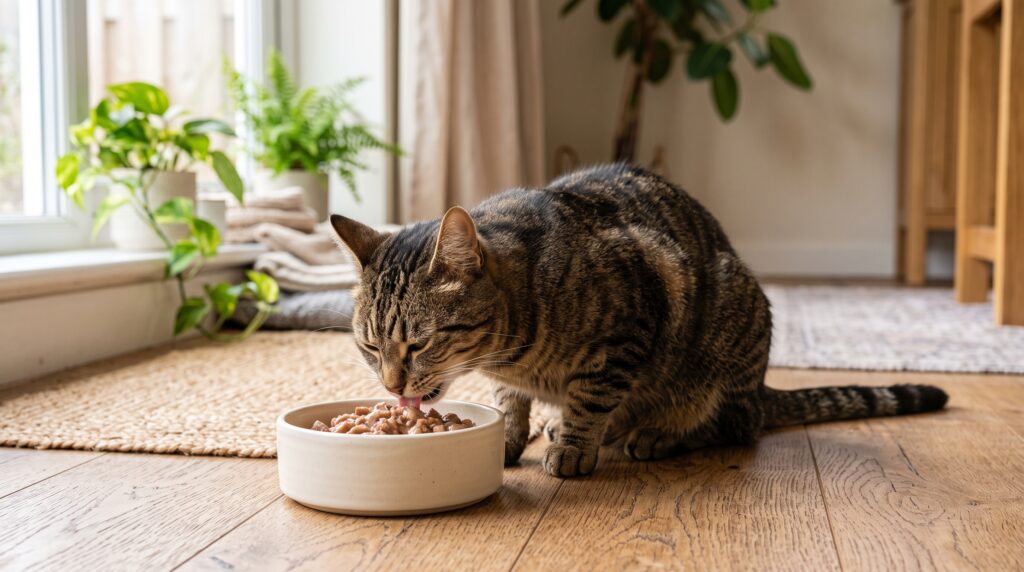
The idea is fairly simple: the digestive tract contains a complex community of microorganisms, often called the gut microbiome. These microbes interact with food, intestinal cells and the immune system.
When that microbial environment is disturbed by factors such as illness, medication, sudden dietary changes or stress, a veterinarian may recommend a probiotic as part of a broader treatment plan.
However, probiotics do not simply “replace all the bad bacteria with good bacteria.” Their effects can vary considerably from one strain and product to another.
Do Cat Probiotics Really Improve Digestion?
They can, but not every cat will benefit in the same way.
A 2025 systematic review and meta-analysis examined research on probiotics, prebiotics, synbiotics and postbiotics in cats. The researchers found that five of seven probiotic trials showed beneficial effects on fecal consistency. At the same time, they concluded that the available evidence was not strong enough to make high-confidence claims about overall effectiveness.
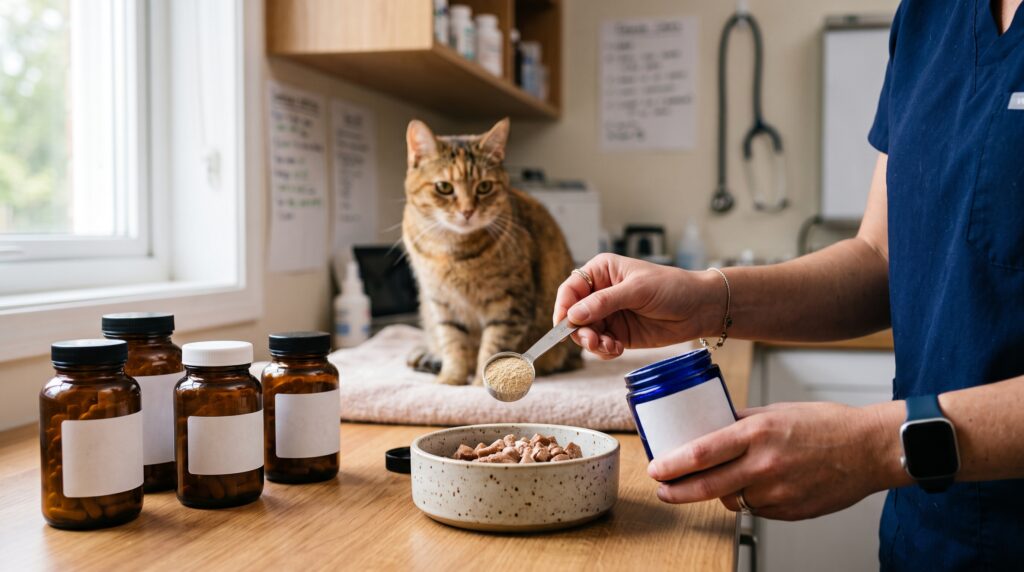
That is a useful way to think about probiotics: promising, potentially helpful, but not guaranteed.
For example, a cat experiencing temporary digestive upset might have firmer stools after starting an appropriate veterinary probiotic. Another cat may show little noticeable change because the real problem is dietary intolerance, parasites, pancreatitis or another condition requiring different treatment.
Potential benefits of probiotics for cats
Depending on the product and the situation, probiotics may help:
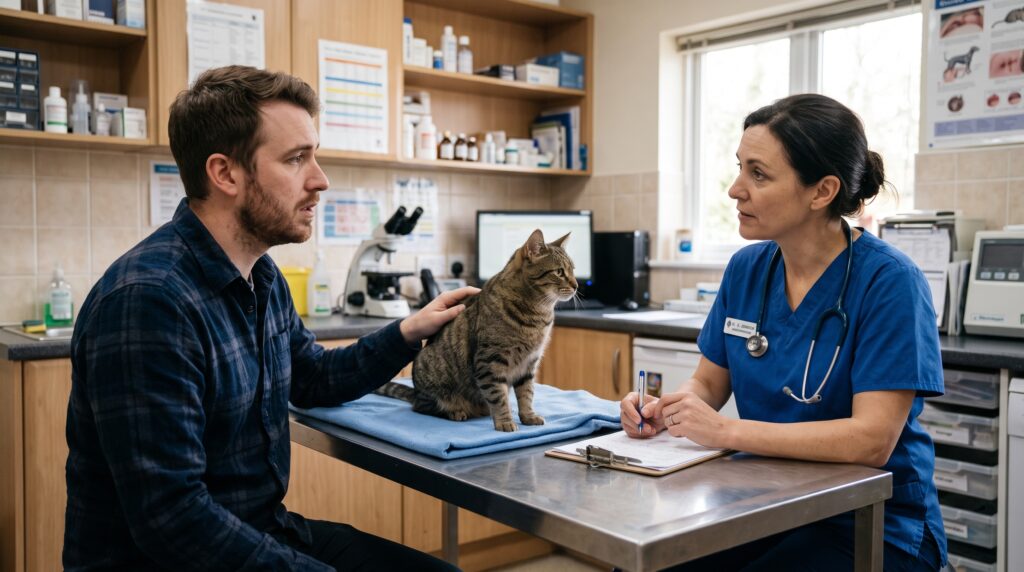
- Support a balanced intestinal microbiome
- Improve stool consistency
- Support normal intestinal function
- Provide additional support during certain digestive disturbances
- Potentially support intestinal immune function
- Help maintain gut microbial balance after disruptions such as medication or illness
Research reviews have identified possible effects involving the gut microbiota, intestinal barrier and immune response, although more high-quality feline research is still needed.
When Might a Cat Need a Probiotic?
A probiotic may be considered when a cat has digestive problems such as diarrhea or changes in stool quality. Veterinarians may also use probiotics alongside other treatments when the intestinal microbiome has been disturbed.
For instance, some cats develop digestive upset during or after medication, while others react to sudden changes in food or stressful situations. Veterinary sources list diarrhea associated with inflammatory bowel disease, antibiotic use and stressful events among situations in which probiotics may be considered.
Still, the symptom itself is not the diagnosis.
Persistent vomiting, diarrhea, weight loss, poor appetite, blood in the stool, dehydration or significant changes in behavior deserve veterinary attention rather than a supplement trial at home.
How to Choose a Probiotic for Your Cat
Not all probiotic supplements are interchangeable. The name “probiotic” on the front of a container tells you very little by itself.
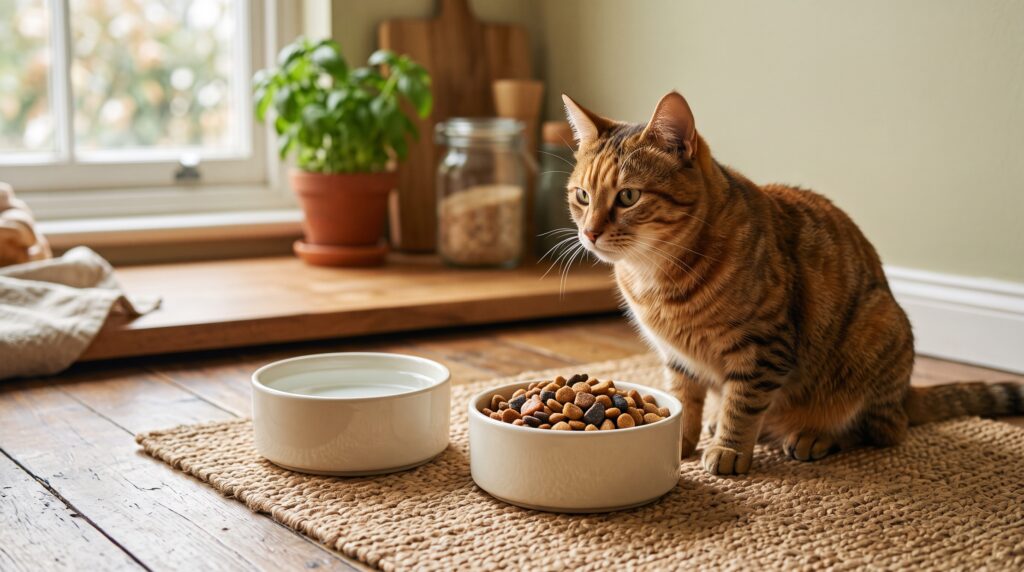
Look for a product that clearly identifies:
- The microorganism or strain included.
- The amount provided per serving.
- Storage requirements and expiration information.
- Directions specifically intended for cats.
- Manufacturer information that allows the product to be traced and evaluated.
A veterinarian can also help you select a product appropriate for your cat’s age, health and digestive symptoms.
This matters because probiotic products can differ in their organisms, doses and evidence. Veterinary sources also caution that supplement quality and label accuracy can vary.
| Situation | Could a probiotic help? | What to do |
|---|---|---|
| Mild, temporary stool changes | Possibly | Monitor and discuss with your vet if it continues |
| Digestive upset after antibiotics | Sometimes | Ask your veterinarian about timing and product choice |
| Recurrent diarrhea | Possibly, but cause matters | Veterinary assessment is more important than supplements alone |
| Blood in stool or severe diarrhea | Do not rely on probiotics | Contact a veterinarian promptly |
| Persistent vomiting or appetite loss | Not a probiotic-only problem | Seek veterinary care |
| Diagnosed chronic intestinal disease | May be part of management | Use only as directed by your veterinary team |
How Should You Give Cat Probiotics?
Follow the product label and your veterinarian’s instructions rather than assuming that a larger dose will work better.
Many probiotic supplements are available as powders, capsules, liquids or tablets. Some can be mixed with food. Veterinary guidance from VCA recommends giving probiotics with a meal unless your veterinarian or product instructions say otherwise.
Consistency also matters. If your veterinarian recommends a particular course, give it as directed and avoid doubling the next dose if one is missed.
It is worth watching your cat during the first few days. Mild gas or stomach discomfort can occur. If your cat develops an unusual reaction, stop and contact your veterinarian. Probiotics should also be used cautiously in sick, debilitated or immunocompromised animals.
Common Mistakes Cat Owners Make
One common mistake is choosing a probiotic simply because it contains a very large number of microorganisms. More is not automatically better. The relevant strain, formulation and evidence matter.
Another mistake is using a human probiotic without veterinary advice. Cats have different nutritional and physiological needs, and evidence from human studies cannot automatically be transferred to cats. Feline probiotic research remains comparatively limited.
Finally, don’t use probiotics to postpone veterinary care. If diarrhea keeps returning, there may be an underlying cause that needs investigation.
Expert Tip: Look Beyond the Supplement
Digestive health is rarely about one ingredient.
A complete and balanced diet, appropriate feeding routine, adequate hydration and proper treatment of underlying disease all matter. Veterinary gastrointestinal diets may be recommended for certain cats because they can be highly digestible and tailored to particular digestive conditions.
So, if your cat has ongoing digestive problems, think of a probiotic as one possible tool, not the entire solution.
Frequently Asked Questions
Are cat probiotics good for cats with diarrhea?
They may help some cats, particularly with stool consistency, but they do not treat every cause of diarrhea. Persistent or severe diarrhea should be evaluated by a veterinarian.
How long does it take for cat probiotics to work?
There is no single timeline for every cat or product. Some effects may become noticeable within days, but the response depends on the probiotic, the cat and the underlying digestive problem.
Can cats take probiotics every day?
Some probiotic products are designed for daily use, but the appropriate duration depends on the individual cat and the product. Follow veterinary and manufacturer instructions.
Can probiotics help cats after antibiotics?
They may be considered when antibiotics have disrupted the intestinal microbiome. However, the timing and choice of probiotic should be discussed with your veterinarian because antibiotics can also affect probiotic effectiveness.
Can probiotics stop cat diarrhea immediately?
No. Probiotics are not an instant anti-diarrheal treatment. They may support intestinal health, but the underlying cause still needs to be considered.
Are probiotics safe for kittens?
Some probiotic products may be appropriate for kittens, but young animals have different nutritional and health requirements. Ask a veterinarian before starting a supplement.
Do probiotics help cats with constipation?
Evidence is less straightforward than it is for some stool-quality concerns. Constipation can have several causes, so recurrent constipation should be discussed with a veterinarian rather than treated with probiotics alone.
Can probiotics cure inflammatory bowel disease in cats?
No. Probiotics are not a cure for feline inflammatory bowel disease. They may sometimes be considered as supportive care, but treatment depends on the individual diagnosis.
Conclusion: Are Cat Probiotics Worth Trying?
Cat probiotics can be useful for some digestive problems, but they are not a magic fix. Current research suggests potential benefits, particularly for stool consistency and intestinal microbial balance, while also showing that more high-quality feline studies are needed.
The best approach is to identify why your cat’s digestion has changed first. Then, if appropriate, a veterinarian can help you choose a suitable probiotic and decide how long to use it.
At Rashanghar.com, we believe pet-care information should help owners make sensible decisions rather than encourage unnecessary supplements. If your cat’s digestion has recently changed, use this guide as a starting point—and involve your veterinarian when symptoms persist, worsen or come with other warning signs.
PubMed — Systematic Review and Meta-Analysis of Biotics in Cats
Best source for the article’s central evidence discussion. The 2025 systematic review assessed probiotic, prebiotic, synbiotic and postbiotic studies in cats and found promising but insufficiently certain evidence. PubMed — 2025 Review of Probiotics in Domestic Cats
Useful for explaining potential mechanisms involving gut microbiota, intestinal barrier function and immune regulation.
PubMed — Probiotics and Cat Health Review
Useful for broader background on feline probiotic research and its current limitations.