
The best deshedding tools for heavy-shedding pets depend on coat type. Double-coated dogs like Labradors and German Shepherds do best with an undercoat rake or a deshedding blade. Medium coats respond to a slicker brush, and most cats need only a soft rubber brush or a fine-tooth comb. The right tool pulls out loose undercoat before it ends up on your sofa, and it keeps the skin comfortable.
Pet hair is more than a cleaning headache. Cats swallow loose fur when they groom, which can mean more hairballs. Dogs with packed, dead undercoat can trap heat and moisture against the skin. Regular brushing with the right tool helps with both.
Which Deshedding Tools Work Best?
Here is a quick comparison before we get into the details.
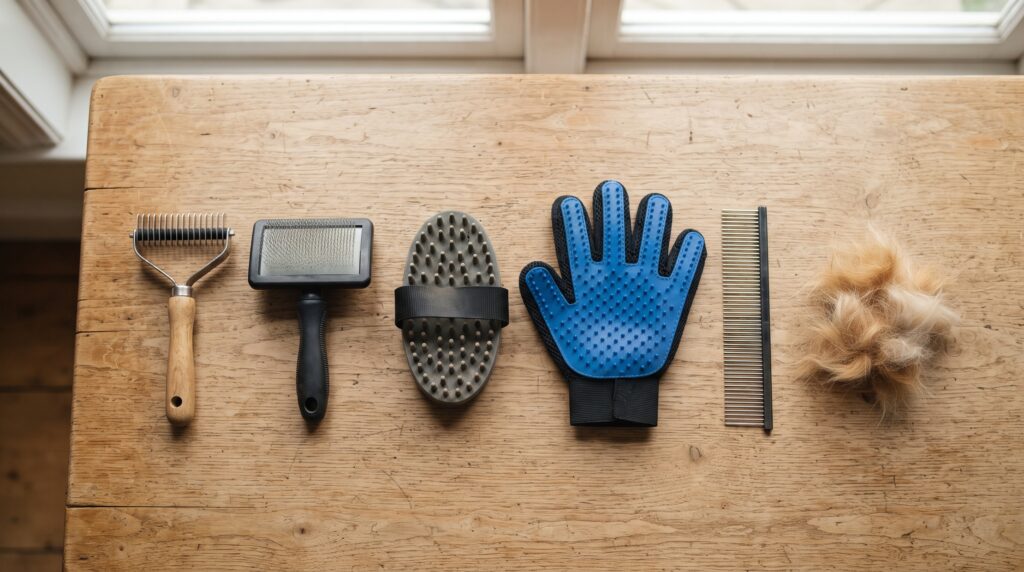
| Tool | Best for | Strength | Watch out for |
|---|---|---|---|
| Undercoat rake | Double-coated dogs (Husky, Golden Retriever, Corgi) | Reaches dead undercoat without cutting the topcoat | Can scratch if you press hard |
| Deshedding blade or edger | Dogs with thick, dense coats | Removes large amounts of loose fur quickly | Overuse can thin the coat and irritate skin |
| Slicker brush | Medium or wavy coats, light tangles | Good all-rounder for fluff and small knots | Fine pins can scrape sensitive skin |
| Rubber curry brush or grooming glove | Short coats, nervous pets, most cats | Gentle, feels like petting | Slower on very thick fur |
| Fine-tooth comb | Cats, feathering, finishing work | Catches loose hair and spots tangles early | Won’t clear heavy undercoat alone |
| Pet vacuum attachment | Pets that tolerate the noise | Collects hair as you brush | Many animals dislike it at first |
Plenty of people own the popular FURminator-style deshedding blade, and it does work well on thick double coats. It just isn’t the right choice for every pet.
How to Match Deshedding Tools to Your Pet
Dogs with double coats
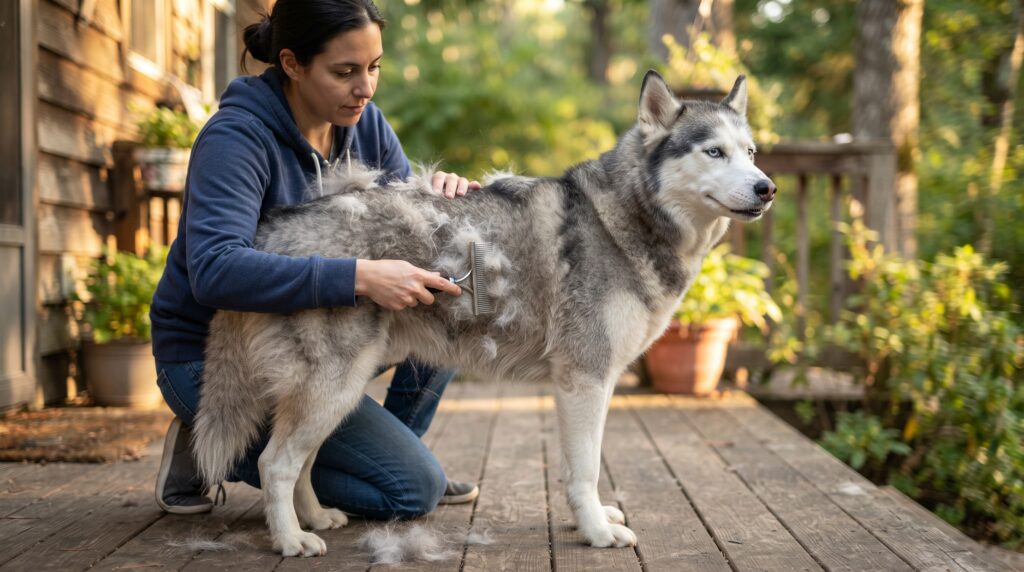
Breeds like Huskies, German Shepherds and Golden Retrievers grow a dense, soft undercoat beneath a straighter outer coat. They shed it in big clumps, usually in spring and autumn.
Start with an undercoat rake. Follow it with a deshedding blade only if the coat is still dense. Finish with a slicker brush to smooth things out.
Dogs with short or smooth coats
Beagles, Pugs and Labradors have shorter fur, but they still shed constantly. A rubber curry brush or grooming glove usually does the job. It loosens dead hair and spreads natural oils at the same time.
Cats
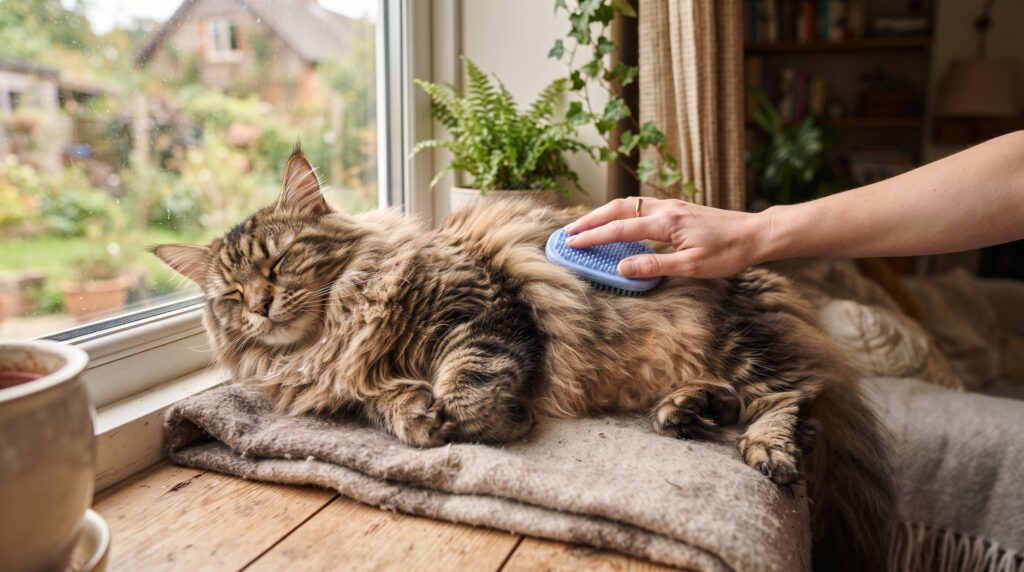
Cats have thinner skin than most dogs, so go gentler. A soft rubber brush works for shorthairs like the common domestic shorthair. For long-haired cats such as Maine Coons, Ragdolls and Persians, add a fine-tooth comb for the belly, armpits and behind the ears, where mats form first.
Choose tools labeled for cats. They’re sized properly and the teeth are spaced for finer fur.
How to Deshed Your Pet Step by Step
- Brush a dry, tangle-free coat first. Work out small knots with a comb. Never run a deshedding blade through a mat.
- Bathe if your dog is very dirty. Warm water and a good rinse loosen dead hair. Dry the coat completely afterward.
- Brush in the direction the hair grows. Use short, light strokes and let the tool do the work.
- Go section by section. Back, sides, chest, then hindquarters. Skip the belly and groin unless your pet clearly tolerates it.
- Stop when the hair coming out slows down. Pushing past that point irritates skin.
- Reward calm behavior. A treat at the end makes next week’s session easier.
Common Mistakes With Deshedding Tools
Most problems come from pressing too hard. A deshedding blade is sharp enough to cut the topcoat and scratch skin, and you won’t notice until the damage is done.
Another frequent mistake is using the wrong tool for the coat. Poodles, Maltese and other single-coated breeds have no heavy undercoat to remove, so a deshedding blade just damages the hair.
Some owners shave a double-coated dog to cut shedding. Groomers generally advise against it, because the coat helps insulate the dog and may grow back unevenly. Check with a professional groomer or your vet before trying it.
Expert Tips for Less Fur Around the House
- Brush more often during seasonal blowouts. Heavy shedders can need a short session every day for a couple of weeks.
- Use a short session, not a long one. Ten calm minutes beats thirty stressful ones.
- Clean the tool as you go. A clogged rake or blade stops working and tugs at the coat.
- Start cats young, or start with a glove. Many adult cats accept a grooming glove long before they accept a brush.
- Do a skin check while you brush. Look for redness, flakes, bald patches or lumps.
When Heavy Shedding Needs a Vet
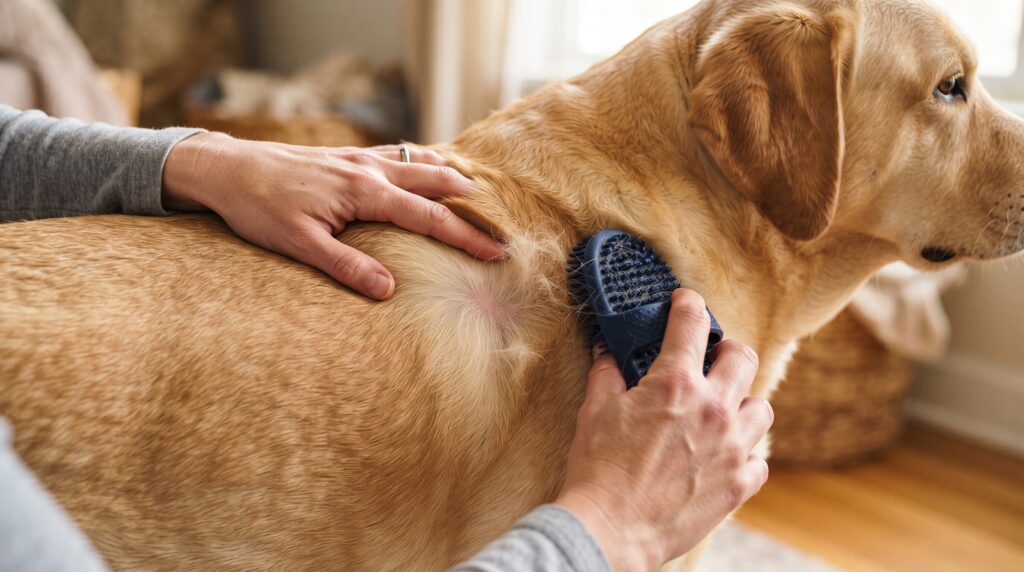
Seasonal shedding is normal. Sudden hair loss, bald spots, scabs, constant scratching or a dull, greasy coat are not. Diet, allergies, parasites, stress and some medical conditions can all play a role. If your pet’s shedding changes suddenly, a veterinarian should look at it before you buy more deshedding tools.
Frequently Asked Questions
What is the best deshedding tool for dogs?
An undercoat rake is the best starting point for most heavy-shedding dogs. It removes dead undercoat without cutting the topcoat. Thick double coats may also need a deshedding blade.
What is the best deshedding tool for cats?
A soft rubber brush or a cat-specific fine-tooth comb works best for most cats. Both are gentle on thin skin. Long-haired cats usually benefit from using both.
How often should I use deshedding tools?
Two to three times a week suits most heavy shedders. During spring and autumn shedding, daily short sessions help. Short-haired pets often need less.
Do deshedding tools actually work?
Yes, when you match the tool to the coat. They remove loose undercoat that would otherwise fall out around your home. They won’t stop shedding entirely, because shedding is natural.
Can deshedding tools hurt my pet?
They can if you press too hard or use them on matted or single-coated fur. Use light strokes and stop if the skin looks red. Gentle brushes are safer for sensitive pets.
Should I brush my dog wet or dry?
Brush a dry coat for most tools. Bathing first can loosen dead hair, but dry the coat fully before using a rake or blade. Brushing wet fur can pull and cause tangles.
Is a deshedding blade safe for cats?
Generally no, unless the product is made for cats and used very gently. Cat skin is thin, and most cats do better with rubber brushes and combs.
Why is my pet shedding so much?
Seasonal coat changes are the most common reason. Diet, stress, allergies and parasites can also cause it. See a vet if the hair loss is sudden or patchy.
Does shaving stop shedding?
No. Shaving shortens the hair but doesn’t stop the shedding cycle. For double-coated dogs it can also change how the coat regrows.
How long does a deshedding session take?
Most dogs need 10 to 20 minutes, and cats usually need less. Longer sessions during seasonal blowouts are fine if your pet stays relaxed.
Choosing Deshedding Tools That Fit Your Pet
Coat type matters more than brand. A rake or blade for thick undercoats, a slicker for medium coats, and a rubber brush or comb for cats and short coats cover almost every household. Keep sessions short and gentle, and watch for any change in skin or coat that might point to a health problem.
Not sure where to start? Check your pet’s breed and coat type against the table above, pick one tool, and try it for two weeks. Then explore the grooming guides here on Rashanghar for more advice on bathing, nutrition and everyday pet care.
- American Kennel Club (AKC): supports breed coat types, double-coat care and brushing routines.
- Merck Veterinary Manual: supports information on causes of hair loss and skin conditions.